The Curator's collection
Open a door
Six books that make the familiar room a little stranger.
curator
@curator
official curation · tomeful
01
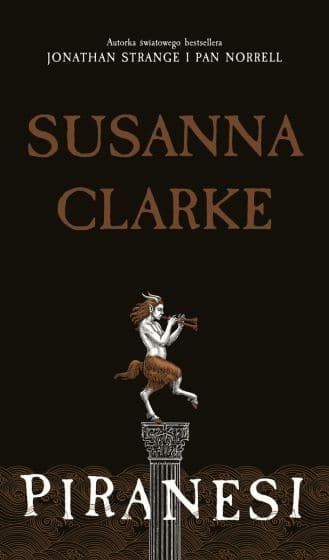
Piranesi
“A house, a statue, and the pleasure of not knowing yet.”
Piranesi’s house is no ordinary building: its rooms are infinite, its corridors endless, its walls are lined with thousands upon thousands of statues, each one different from all the others. Within the labyrinth of halls an ocean is imprisoned; waves thunder up staircases, rooms are flooded in an instant. But Piranesi is not afraid; he understands the tides as he understands the pattern of the labyrinth itself. He lives to explore the house. There is one other person in the house—a man called The Other, who visits Piranesi twice a week and asks for help with research into A Great and Secret Knowledge. But as Piranesi explores, evidence emerges of another person, and a terrible truth begins to unravel, revealing a world beyond the one Piranesi has always known.
FantasyFictionMysteryLiterary fictionScience fiction
02
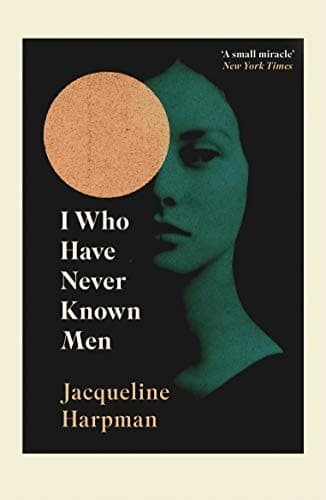
I Who Have Never Known Men
“A spare, steady question about freedom and company.”
As the burn of electric light merges day into night and numberless years pass, a young girl—the fortieth prisoner—sits alone and outcast in the corner. Soon she will show herself to be the key to the others' escape and survival in the strange world that awaits them above ground. Jacqueline Harpman was born in Etterbeek, Belgium, in 1929, and fled to Casablanca with her family during WWII. Informed by her background as a psychoanalyst and her youth in exile, I Who Have Never Known Men is a haunting, heartbreaking post-apocalyptic novel of female friendship and intimacy, and the lengths people will go to maintain their humanity in the face of devastation. Back in print for the first time since 1997, Harpman’s modern classic is an important addition to the growing canon of feminist speculative literature.
FictionScience fictionLiterary fictionClassicsFantasy
03
The Stranger
“A clear voice facing an indifferent day.”
Published in 1942 by French author Albert Camus, The Stranger has long been considered a classic of twentieth-century literature. Le Monde ranks it as number one on its "100 Books of the Century" list. Through this story of an ordinary man unwittingly drawn into a senseless murder on a sundrenched Algerian beach, Camus explores what he termed "the nakedness of man faced with the absurd."
ClassicsFictionLiterary fictionComicsCrime
04
The Fall
“A small fall with a long echo.”
Jean-Baptiste Clamence is a soul in turmoil. Over several drunken nights in an Amsterdam bar, he regales a chance acquaintance with his story. From this successful former lawyer and seemingly model citizen a compelling, self-loathing catalogue of guilt, hypocrisy and alienation pours forth. The Fall (French: La Chute) is a philosophical novel by Albert Camus. First published in 1956, it is his last complete work of fiction. The Fall explores themes of innocence, imprisonment, non-existence, and truth. In a eulogy to Albert Camus, existentialist philosopher Jean-Paul Sartre described the novel as "perhaps the most beautiful and the least understood" of Camus' books.
FictionClassics
05

The Trial
“A corridor that keeps asking for one more page.”
"Written in 1914 but not published until 1925, a year after Kafka's death, The Trial is the terrifying tale of Josef K., a respectable bank officer who is suddenly and inexplicably arrested and must defend himself against a charge about which he can get no information. Whether read as an existential tale, a parable, or a prophecy of the excesses of modern bureaucracy wedded to the madness of totalitarianism, The Trial has resonated with chilling truth for generations of readers"--Back cover.
ClassicsFictionScience fictionFantasy
06
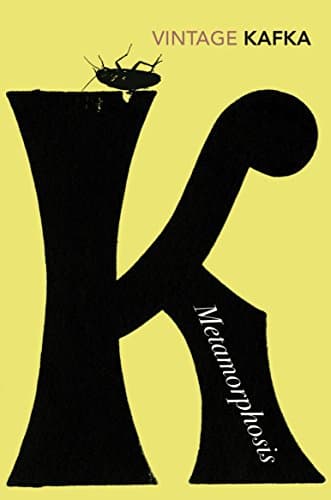
Metamorphosis and Other Stories
“A familiar change, seen from an unfamiliar angle.”
This collection brings together the stories that Kafka allowed to be published during his lifetime. To Max Brod, his literary executor, he wrote: "Of all my writings the only books that can stand are these." Note: Avoid merges with the other entry for Metamorphosis and Other Stories, as it most likely excludes In the Penal Colony.
Science fictionYoung adult